
Building Blocks
Concrete buildings can be constructed using solid or hollow blocks. Solid blocks are made of solid concrete and are denser and stronger than hollow blocks. They are typically used for load-bearing walls and other structural components of a building. Hollow blocks, on the other hand, have one or more hollow cavities within them, which reduces their weight and makes them easier to handle and transport. They are commonly used for non-load-bearing walls and partitions. Both solid and hollow blocks have their advantages and disadvantages depending on the specific application and building requirements.


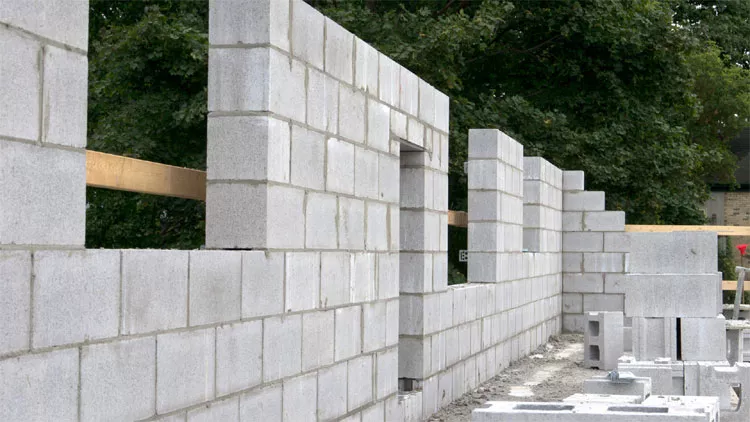
Types
Solid Blocks
- Size: 8″x8″x12″, 6″x8″x12″, 4″x6″x12″
- Strength:
- LB = 2000psi
- NLB = 1500psi
Specifications
| Dimensions (mm) | 100×200 |
|---|---|
| Thickness (mm) | 50,60,80 |
| Strength (psi) | 7000 |
| Nos/Sft | 4.5 |

Hollow Blocks
- Size: 8″x8″x16″, 6″x8″x16″, 4″x8″x16″
- Strength:
- LB = 2000psi
- NLB = 1500psi
Specifications
| Dimensions (mm) | 100×200 |
|---|---|
| Thickness (mm) | 50,60,80 |
| Strength (psi) | 7000 |
| Nos/Sft | 4.5 |
